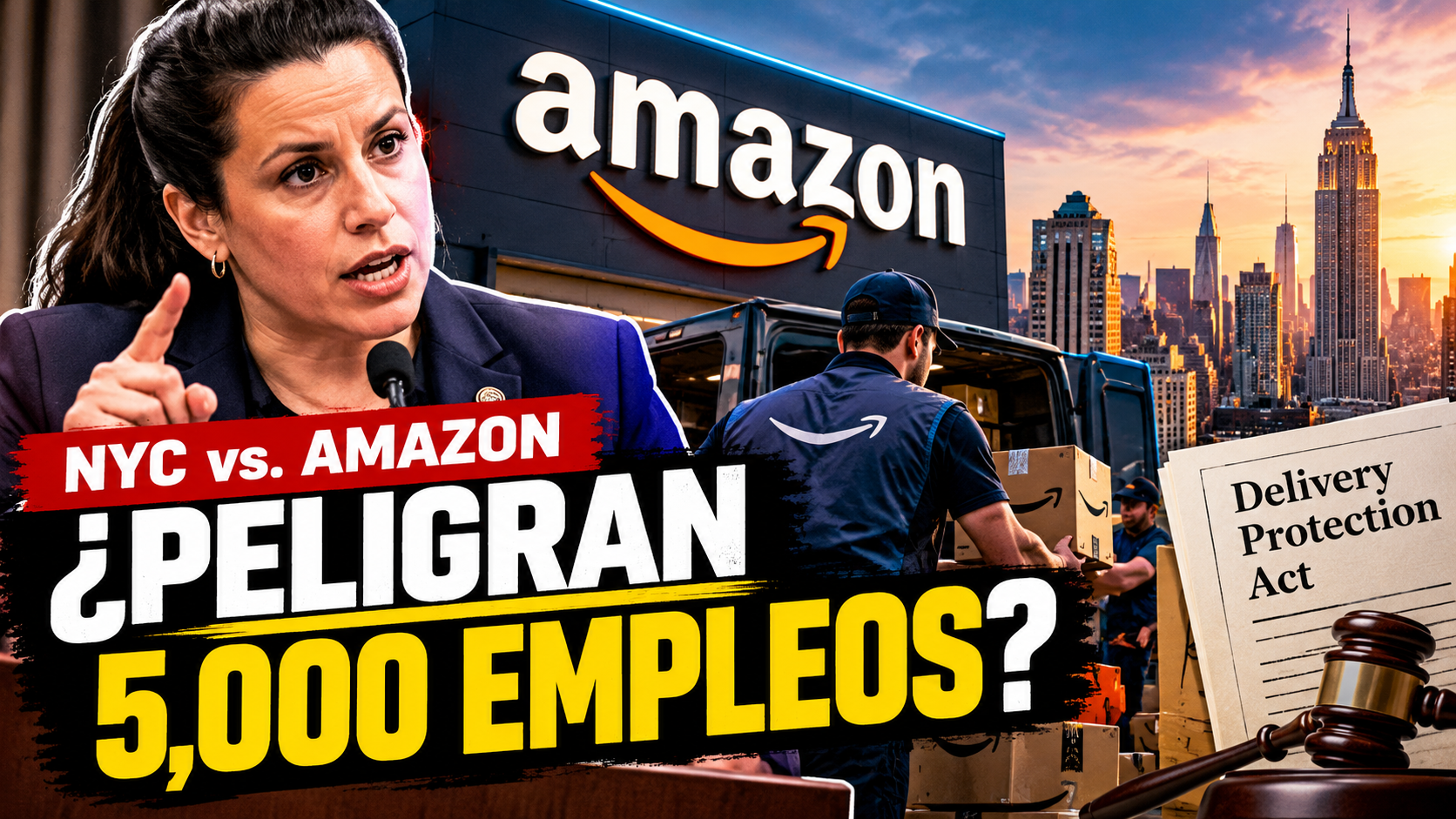
The councilman Tiffany Caban, leading promoter of the initiative, holds that large corporations exercise strong control about routes, schedules and working conditions while keeping many drivers under contractors. The project's supporters say that change could provide more protection to workers and put new safety standards in place for distribution plants.
Amazon, however, warns about important economic consequences. The company claims that its network in New York includes more than 40 small partners employing more than 5,000 peopleand argues that the new regulations could force her to reconsider the location of some of her operations out of town.
Caban has rejected warnings that thousands of jobs would disappear and claims that they are part of an anti-law corporate campaign. The project has been widely supported within the council and also with the support of Mayor Zohran Mamdani, whose government argues that big companies have to assume more responsibility for work conditions and street safety.
The debate now raises a difficult question for New York: Can the town strengthen the rights of workers without leading large operators to move jobs and distribution centers outside the five districts?
The decision could become an important precedent for other U.S. cities that also seek to regulate the growing business of last-mile deliveries.